#makeartnotwar #art pic.twitter.com/RaPFqosRFg
— Reframe Your Artistry (@HonigJq) November 27, 2018
by honigjq
Find Clarity with a Purposeful Pause
The more we practice pausing, the better equipped we are in an artistic moment of need. Take my cooking as a parallel universe. A decade ago, I cooked almost every night. I’d carve out thirty minutes from the rest of my schedule and labeled the time, “cooking.” Cooking is a form of pausing if you grant open space for its cause. I liked what I made, then. A few (perhaps lying to be polite) recipients even said they liked my meals. My pausing paid off.
Life happened, work picked up, a kid arrived, and I’d blog or hit the gym while my husband started to cook for us. He likes to cook and is great at it. Hallelujah! He enjoys pausing, in that way. While I didn’t mind the call of duty, I found I preferred to pause at the gym or via art making. My cooking skills went out the window. When I recently tried to make a meal for us, I couldn’t even come up with a menu. My mind had fallen out of the practice of making space for cooking. When I did try to cook, my husband hovered, reminding me to pay attention to an active burner and pan. It was more fire safety than micromanagement (that’s what he said). By this point, I had removed myself so far from the cooking pause that my personal experiences swallowed the meal I made long before it hit the table. I’d think about what to write about next or grab a few extra push-ups while noodles burned to the bottom of pans.
The more often you automatically check your Twitter feed while I’m trying to talk to you on this blog, you can bet you are doing a similar kind of burn. And if you usually review social media screens while art making, you more than have priorities wacked, you have your head wacked. Your frontal lobe short circuits, and the rest of your brain needs some loving. How may you recalibrate? Practice intentional pauses.
I needed to pause and show up to cooking if I had any chance to get back on track. Well, I didn’t. The further I removed myself from pausing in this way, the further my cooking focus and interests dissolved. When we pause in productive ways, in directions that matter to us, our lives become more fulfilling. Otherwise, you risk chronic distraction. Practice pausing in ways that interest you.
| LIST THREE INTERESTS:
SPEND AT LEAST 30 MINUTES PAUSING WITH THESE INTERESTS, WEEKLY TRY THREE TEN MINUTE INCREMENTS OR A 30 MINUTE INDULGENCE….PAUSE! |

The beautiful coworker of mine, Theresa, who became a best friend and role model for me as a mom. Thanks for the amazing share of “The Smallest Girl in the Smallest Grade” by Justin Roberts.
I’ve always wanted to inhabit small spaces. And with my small body, I want to do good things in the largest, quietest way possible. Sounds impossible? Troubled?
Maybe. But a beloved fellow social worker gifted my daughter, “The Smallest Girl in the Smallest Grade,” for her birthday last year. When I opened the book, I met Sally. Hardly anyone noticed, hardly anyone knew that little Sally was paying extra special attention.
One day, she raises her hand in the cafeteria and begs her classmates to stop being mean to one another. She recognizes that the bullies have been bullied themselves. She gets there is conflict and difference and fairness and lack of fairness. But she says, basically, hey – enough is enough.
Choose love. Raise you hand with me. Raise your hand as Sally proclaimed. Enough is enough.
I wish it were that easy. I wish I had more answers. But I’m calling on all y’all Sallys. I know I am not alone, Sally reminded me so. I take up small physical spaces because the world can weigh me down. My own brother does at times. His response to his inner pain boils up into some of the most hurtful and scary ideas I have ever heard. But I understand he is in pain. Those who need the most love can appear the least lovable. He used to keep it in my immediate family, the hurt at least felt contained to the people that also saw the kind, funny, and vulnerable heart he also holds. It is a test, a challenge…a challenge to humanity more than ever. How do we love the pain? How do we heal, now?
What do we need?
We need fewer guns. And more viable mental health care.
We need less standardized tests. And more compassion in our school curriculum.
We need leaders who build us up, instead of tearing us apart.
We need parents who forgive one another as to model forgiveness for their children.
We need more love.
We need to listen to the smallest girl in the smallest grade, as if our lives depend upon it.
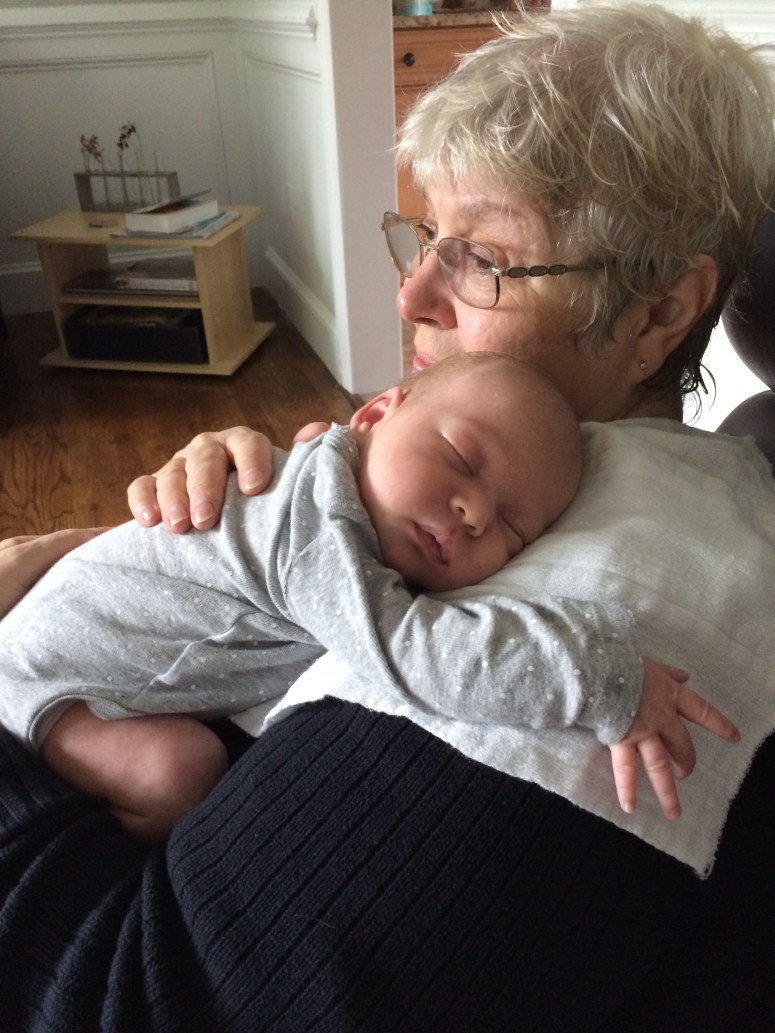
Two of my favorite muses. My mother, here, inspiring yet another generation of mindful artists.
Two people are standing in front of a painting by Jackson Pollock. One says genius and the other says a kid could do that. One is reminded of landing in a desert storm and the other dispassionately stares at drips and scribbles. Same painting, two experiences, and all in one family!
Tada, what makes us different makes us stronger. Pollock and these two people have unalike internal experiences when it comes to his art. And that is okay. Mindfulness, tolerance that softens reactivity and judgment, embraces differing creator and audience experiences. A mindful artist works from and reaches out to the universe with an open mind.
We are too varied as a species to force a singular perspective, because of those gosh-darn complicated very human parts of us called the brain and social forces. Our personal story and neurological wiring speaks to us as much, often, as what’s right in front of us.
Many of us miss out on fully showing up for what’s right in front of us because we’re too busy romancing old stories and autopilot biases. Case in point, pondering Pollock. Even though our stories and wiring have a lot to say, we may be doing ourselves, our artistry, and the world a disservice by thinking they get to call all the shots.
Fluid frames of reference resolve disputes over how to interpret art. And all audience opinions may end up winning! The mindful artist that tolerates a variety of audience opinions, proceeding to the beat of her drum regardless, may be the biggest winner.
Wouldn’t the world be a better place if we all tolerated fluid frames of reference on a daily basis?
My mom molded me into a mindful artist without her even labeling it that. She welcomed creativity in whatever form and honored whatever I called my whatever. Bless her heart, she waited til I was a ripe seventeen years old to challenge my point of view after reading my essay on the racist, feminist economics of Barbie.
“I’m not sure I agree with what you’re saying here,” she concluded, “this isn’t Barbie’s fault?”
Anyhow, leaving Barbie out of this, til age seventeen and from every dang year after that, my mom demonstrated tolerance for the point of view from which my creativity pulled. I have a savage curiosity to get to the why under the because and to challenge norms. It drives many people bonkers. Including myself. But, momma more than tolerated me. She allowed me to develop my own life stance through space to explore and questions (usually) rather than harsh critiques. Among our rich bonds, we’ve developed a shared respect for art-whatever, even if we have very different experiences with whatever has been created.
Play around with fluid frames of reference, today, in honor of my beloved mother’s 70th. Mindful artistry blossoms from the flexibility to do just that. At times, allow an onion to be an onion. As a therapist, I often hear my husband say, “let a text be a text, don’t read ideas between the words.” Same thing. There is health in simply seeing the onion.
Practice awareness of explicit ideas.
Practice now: just see the onion.
Of course, the brilliance of art is that an onion may symbolize much more. In this way, even side-by-side bananas can be sexy, no matter the shade or degree of spotting. For the writer or poet, onion expressions embody layers beneath the surface or inspiration for bitter tears.
Practice representational awareness.
Practice now: what does an onion mean to you?
Practice now: create a story about the side-by-side bananas.
For farmers, a relationship to an onion’s quite different than the one that top chefs hold. Point of view affects our experience with anything, including art. People may be working with the same onion but vary in their internal processes. And for those who have never seen an onion, what on earth could it possibly be? (To my daughter, they look like, Boobies!)
Practice alternate points of view.
Practice now: challenge yourself to imagine what else the onion could be, completing the phrase below.
This is not an onion, it’s ______________
And thank you, Brenda Louise Kutz Honig, for sticking to the beat of your wild drum…and raising a mindful artist. You are loved.
|
Artistic Frames of Reference Explicit ideas: a literal thing, concept, person, place, or time Representations: seeing more than literal meaning Points of view: characteristics of the creator or audience (I.e., age, culture, gender, period in history, and education) |
Imagine if variable frames of reference could be applied to religiosity. Maybe humans could better co-exist? You could have your opinions and I could have mine. You could have an explicit frame of reference and mine could be representational. You could see Christmas as the birth of Christ and I could see it as a day off from work to exchange presents and share food with loved ones. And we can hug out our right to our point of view. Without forcing singular realities, flexible frames of reference make us a less judgmental world from the inside out.
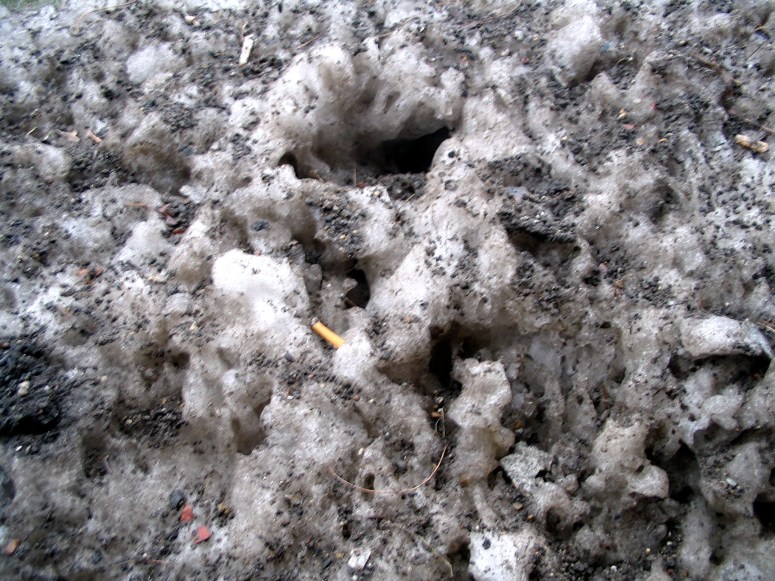
cigarette in sidewalk snow, boston, ma 2009
Mindful art making expands our eco-awareness. The conscious choices for our art making, now, mirror the same choices I try to practice regarding the natural and material world that we all share.
Take a walk outside. Locate a displaced object or slice of nature.
Before doing anything else, PAUSE! Be with whatever you have selected to get to know more fully. Allow the natural inclination of things – impermanent, imperfect, and incomplete – to be noticed and embraced.
Practice quieting the volume on unrelated thoughts, other places you need to be or what should happen next, and allow yourself to be with this memory, picture, or object for a minute. Go ahead, with steady breathing and a lengthened spine to welcome fresh energy, elevate your awareness. In honor of all ways of life, I invite you to join me – as I try to do myself, about once a week – to reflect on the natural state of things.
Elevate awareness of what you have chosen to notice through your senses and lessen distractibility. After pausing choose from the following: refrain, honoring things just as they are; respond via an original point of view through conversation, journaling, poetry, essay, memoir, or storytelling; or repurpose the thing into a hybrid thing.
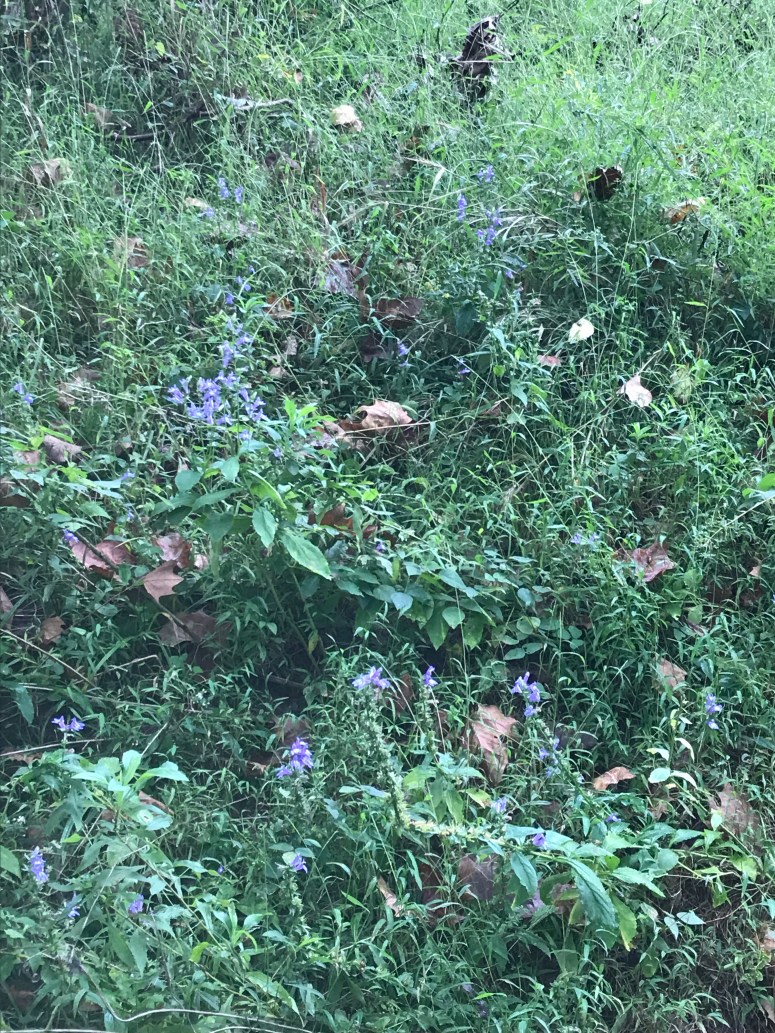
Like Wabi-sabi’s regard for imperfection, mindful art doesn’t try to put a glossy or forced spin on anything. The aesthetic, if practiced, may have healing and invigorating properties. Imagine a singular charcoal stroke pressed across repurposed newspaper. Imagine songwriting with improper grammar and catchy rhymes. Imagine chipped sculptures of lost civilizations. Imagine bodies moving in sync regardless of size and shape. Every time we take actions into the direction of noticing and then surrendering to what is, reframing negative judgments into something honored, we rewire our beings. I believe we also dust off cultural edginess and arbitrary judgments. We shift into compassion and empathy generally, and acceptance of ourselves, specifically. Mindful art frames our angle on beauty more broadly.
Daring to dream, regard for mindful art may also be a global action that could heal an overstimulated, fatigued world. Compelling? Sure is. Nature is one of my favorite sources for mindful art. Are you aware of or value its authentic states? For instance, is there a difference when you walk through the woods rather than a manicured Italian Garden that you’ve paid admission to see? Is one really more valuable than the other? Applying a mindful artistic lens, I propose not. Yet, one is more typically viewed as majestic or artistic. If the Italian Garden persists as the essence of one’s aesthetic, well – that’s all fine and dandy. However, I wish to expand your angles on nature, like angles on yourself, shifting into equal regard for polished and inherent states. Think of your local woods as a representation of you, yourself, as a natural muse. Just as nature may be: overgrown, thorny, dark at times, yet lush, so may you be. Awareness of who you are, organically, and where you situate, now, you’ll access a complete artistic toolbox. Fuller awareness expands artistry from the source. YOU are YOU, WOODS are WOODS, and both are bold, beautiful collections of things.

I prefer the imaginary places. Maybe that is apparent to you after reading my philosophical blah blah blahs.
My mind longs to go to places to which neither plane nor train can transport.
I imagine kindness as a core currency and what makes us different makes us beautiful. Thoughts of global compassion fire me up. Imperfection is sexy. And I hope these angles come through as distinct elements of my art making. For those elements are true to me and therefore belong to my true art making. Every artist will be different, as will every artistic moment or decade in a true artist’s life.
But what makes mindful art original is the awareness of the creator to be able to identify their personal, community, worldly, and imagined sources. With such awareness, narrow aesthetic values inherently erode, replaced by broader options, because no two people, no two places, no two moments in time could ever be the same.
If you are aware of what it is you like or what is unique to you, act on that impulse regularly. In time, those with appreciation for similar impulses will gravitate toward your work. Your audience may grow. But start with you, you are the base and the original audience to please.
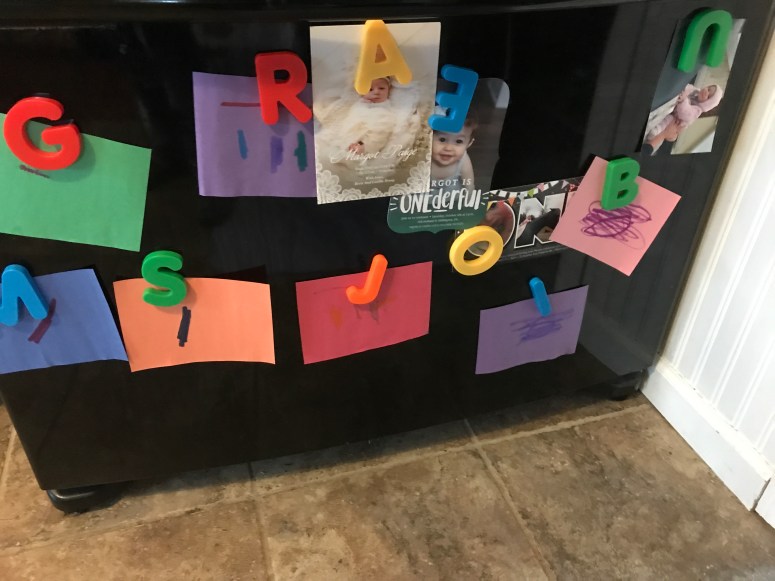
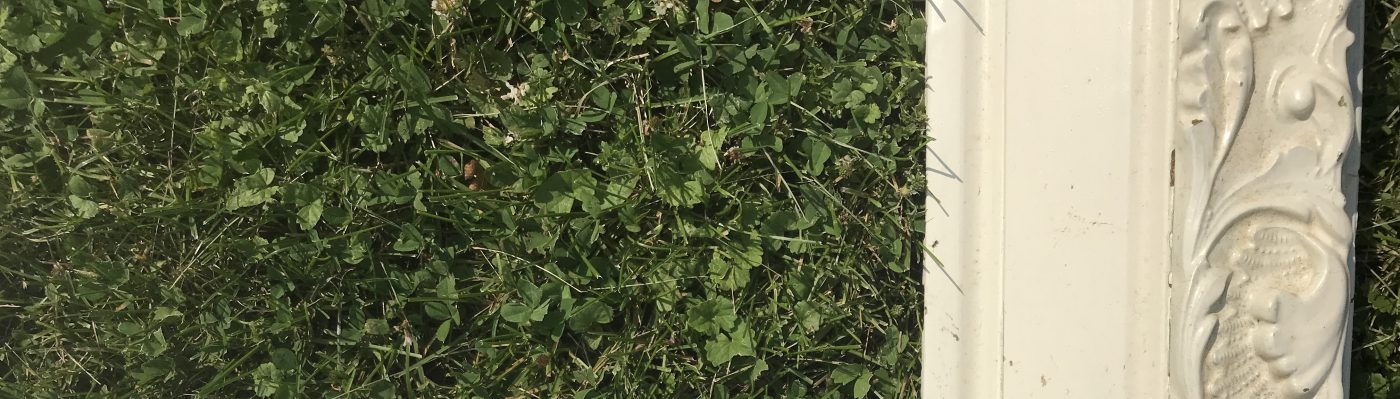
Locate a tilted frame. Intend to marvel. We all have one nearby. Some of us are more comfortable letting them be. Before you supposedly “fix it” (DON’T YOU DARE TOUCH IT), sit back, relax, and marvel. MARVEL, yeah, MARVEL, that’s what I said. Quiet the rest of your mind and follow along:
Intend to marvel just as the frame situates. Pause and take it all in from a fresh point of view.
Find yourself in a comfortable posture, lengthening your spine to channel new energy. Prompt yourself to carry on steady breathing. Do not force your breathing, remember like your artistry, mindfulness is a human practice of let it be not be perfect. From this posture, notice the frame. At first, you may fixate on the tilt. You may want to fix it based on how you’ve learned most others like it should be. Let it be, instead. Stay as still as possible. All you are doing is looking at the frame.
Redirect your energy from tilts and shoulds. What else do you notice about the frame? Ornate or subtle design? Smooth or coarse texture? Take a good look at what’s inside the frame.
Thoughts, feelings, physical sensations may pull you from your intention. Practice self-compassion and do not judge nor force personal experiences away. However, like clouds, allow them to pass and come back to the intention of noticing the tilted frame. Intentions are the blue sky constant, same as flight, eventually we move through the clouds and clarity returns.
The frame is permission not to fix or fixate, letting go of what doesn’t matter, pausing long enough to sit with what does.
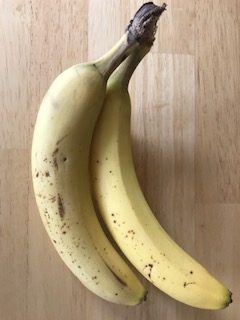
Play around with artistic awareness through different types of thinking. At times, allow bananas to be bananas. As a therapist, I often hear my husband say, “just let a text be a text, don’t read words between the words.” Same thing. There is health in simply seeing bananas.
Practice awareness of explicit ideas.
Practice now: just see bananas.
Of course, the brilliance of art is that bananas may also be so much more. In this way, even side-by-side bananas can be sexy, no matter the shade or degree of spotting. For the writer or poet, onion expressions may embody layers beneath the surface or inspiration for bitter tears.
Practice representational awareness.
Practice now: what does an onion mean to you?
Practice now: create a story about the side-by-side bananas.
For the farmer, a relationship to an onion may be quite different than the one that top chefs hold. Point of view affects our experience with anything, including art. Both people may be working with the same onion but very different internal processes. And for those who have never seen an onion, what on earth could it possibly be? (Boobies? my then breastfeeding daughter once said of my mother’s skilled onion still-life)
Practice alternate points of view, expanding awareness.
Practice now: challenge yourself to imagine and see through different points of view, completing the phrases below.
This is not an onion, it’s a ______________
These are not bananas, this is a picture about ________________
 Reframe Your Artistry