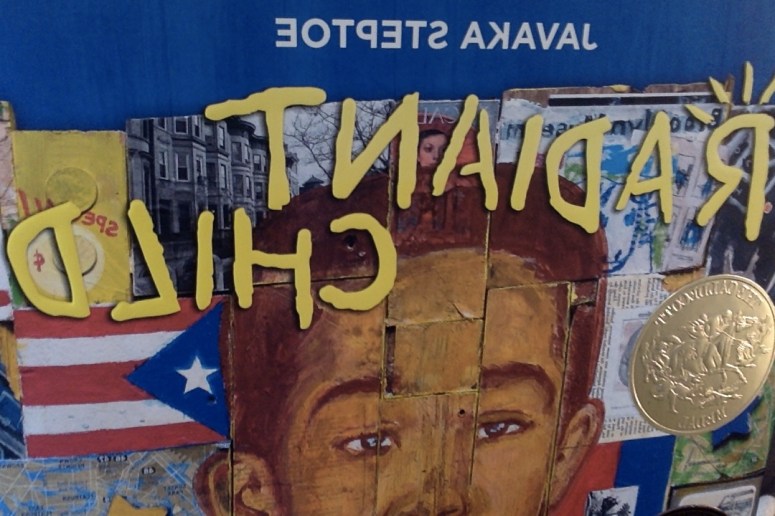
Radiant Child by Javaka Steptoe, Mindful Brilliance

Photo on 3-14-19 at 9.10 AM

While waiting for my monthly writers’ group to organize at the local, charming bookstore, I told myself I’d only purchase a book for my daughter if “the right one popped out.” I didn’t have much time nor spare money, and while the idea of purchasing a book for her upcoming birthday seemed like the best kind of gift to consider, the image of our children’s book mess all over the living room held my reservations in tact.

The bar was high.

But there it lept out at me. In the Black History Month display, bold colors and the portrait of a young artist that I long admired, pulled me to it.

Radiant Child, a reference we would like to apply to all our children, also uniquely references Jean-Michel Basquiat. Basquiat has been credited as the artist marking a paradigm shift into more diverse voices in American high art. There is a line in the early pages composed by the sensitive and talented Javaka Steptoe, describing Basquiat’s drawings as “not neat or clean, nor does his color stay in the lines. They are sloppy, ugly, and sometimes weird, but somehow still BEAUTIFUL.” 

While the book is not filled with Basquiat replications, there is something even more compelling at work. Steptoe stated that the illustrations (earning a Caldecott Medal) are inspired by the style of Basquiat. He made an impression upon Steptoe as a young child, and fellow NYC native, both gravitating toward art, early, for salvation.

But what really made my creative heart explode, was Steptoe’s approach to creating his own work with repurposed wood, “I chose to create my own interpretations…,” upon, “found wood harvested from discarded Brooklyn Museum exhibit materials, the dumpsters of Brooklyn brownstones, and the streets of Greenwich Village and the Lower East Side.” The fusion of Steptoe and Basquiat is both electrifying and haunting.

It is an understatement that Basquiat left this world and the art world too soon, at the young age of twenty-seven. But in my dreams last night, and throughout my artistic gestures today, I feel the still roaming, giant spirit of Basquiat. I cannot wait to share this book and these artistic points of view with my daughter. And when I view the work of Basquiat, though I never met him, and though the details of our lives are quite different, I feel less alone.
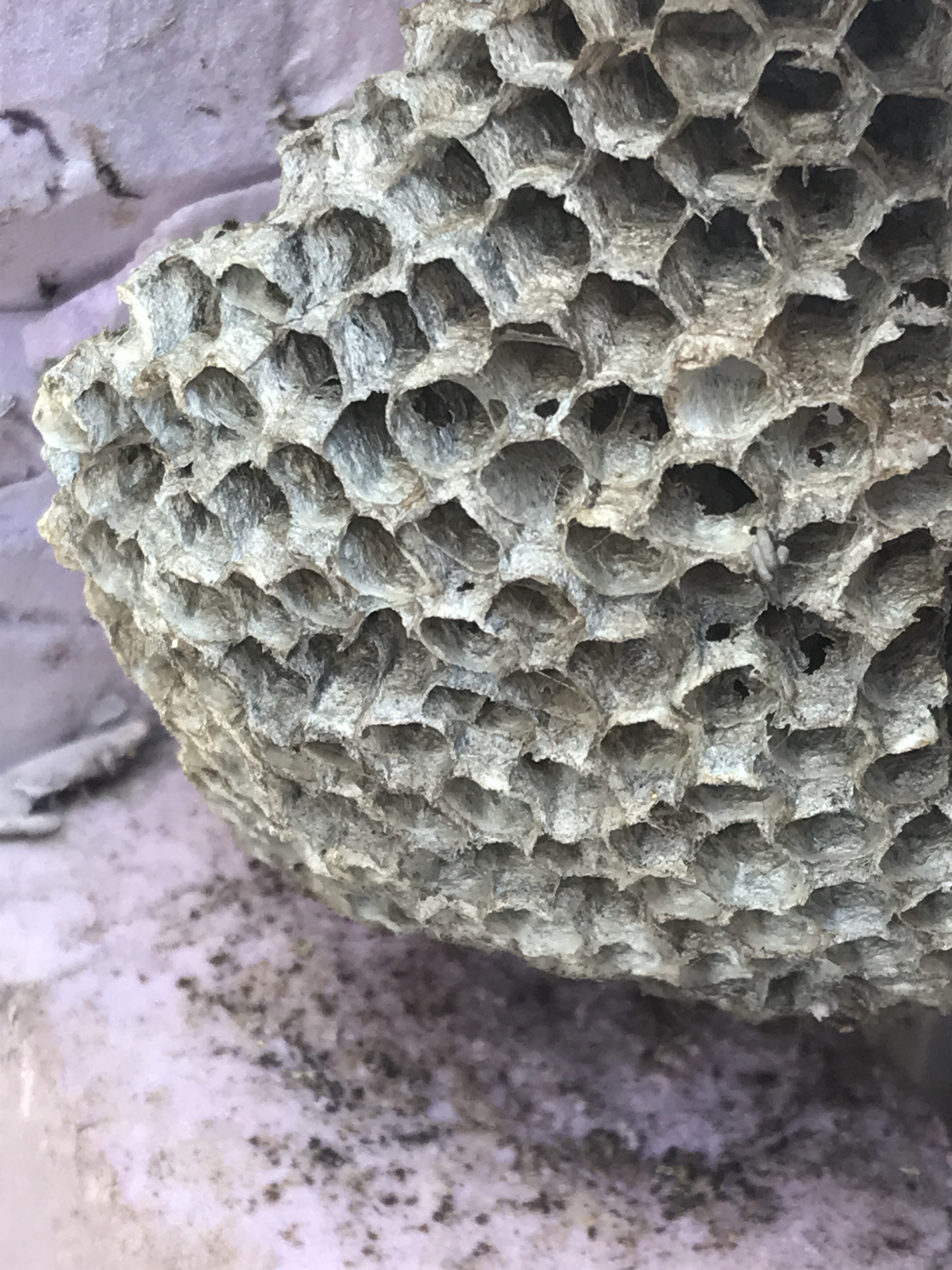
A Meditation in the Details

Please join me in congratulating Patrick Sullivan, a multi-talented woodcarver, baker, and fine artists – and all around kind hearted human. Here is his latest meditation on the details. Says the work took about an hour of contemplation to complete.

20190215_104315_Film2

Pause, with Mollie Allen

Mollie. Pause.


Please check out this talented, mindful artist – Mollie Allen, featured February 7-28th at Chester County Art Association. An artist’s Q &A talk with take place Thursday, February 21st at 6pm. Mollie is a primary muse for the book, Reframe Your Artistry, and an inspiration to me as both human and artist. This featured piece is aptly titled, “Pause.”


Revived with My Wabi-sabi Way

img_0813

Maybe my dance partner – Michele – was speaking directly to me, as she sometimes does, by sharing a beloved book. However it came to be, Wabi-sabi makes sense. Koren’s Wabi-sabi for Artists, Designers, Poets, and Philosophers registers with my adult point of view:

“Wabi-sabi is a beauty of things imperfect, impermanent, and incomplete. It is a beauty of things modest and humble. It is a beauty of things unconventional…to create beautiful things without getting caught up in the dispiriting materialism that usually surrounds creative acts…deep, multi-dimensional, elusive – appeared the perfect antidote to the pervasively slick, saccharine, corporate style of beauty that I felt was desensitizing American society” (pp.7-10)

Wabi-sabi has blossomed my artistic, professional, and personal life. The mindful angle illuminates the way I view my imperfect art, my imperfect body, my imperfect love, my imperfect family, my imperfect emotional states, this imperfect moment in history, and many many imperfect actions. In what I have coined My Wabi-sabi Way, bastardized with personal applications far removed from ancient Japanese intentions, life is more beautiful. I regularly tune-up My Wabi-sabi Way like a meditator might upkeep their formal practice with a new cushion or location. I do this by gathering imperfect items from nature. Recent episodes include collecting broken and jagged seashells along the South Carolina coast; photographing muddy puddles along a desolate lane; and scanning the sky above for a blend of light and dark clouds. In nature, Wabi-sabi’s energy is ever present. And in the natural world, now, I have an unspeakable sense of belonging.

Begin again.


img_1267

How do we begin again?

It’s a time of year, and arbitrary energy, and an opportunity (sometimes in disguise). For some, it is an understandably brutal challenge. We crave the familiar before we crave new and challenging breakthroughs.

I have been absent from, for instance, writing for this blog for a month. I took a pause to work on a children’s story. I find that returning, I am aware of resistance. The pause did me good, of course, but in this moment – all it seems to have done if remove me from momentum.

Ah, then I think of physics. That bottled up pause turns into a pop. Discomforts are merely a cue that what you do need is reawakening. The New Year is exactly the time to take stock of what has been neglected and to begin again, fresh, in this moment.

Don’t you dare skip ahead, too far along, toward a destination. It’s easy to compare when thinking how ridiculous it might be to plan the next holiday season other than imagining the possibilities. Like next holiday season, imagine, but do not predict. Instead, redirect energy into the small ways you can experience magic and purposefulness, right now.

Begin again. Every subtle movement counts. You have to begin somewhere.

And back to physics, yeah, there’s that classic principle: “A body at rest will stay at rest…”

So, ever so gently, wake her back up.

Build Your Discomfort Muscle

Photo 514

You’re going to need this muscle to keep moving forward as an artist:

DISCOMFORT MUSCLE

The willingness to get back up, keep kicking butt even after an uncomfortable

experience. The willingness to face unfamiliar situations with courage.

The willingness to try, and to try try again.

Avenues to Expand Abstraction

IMG_1161.JPG

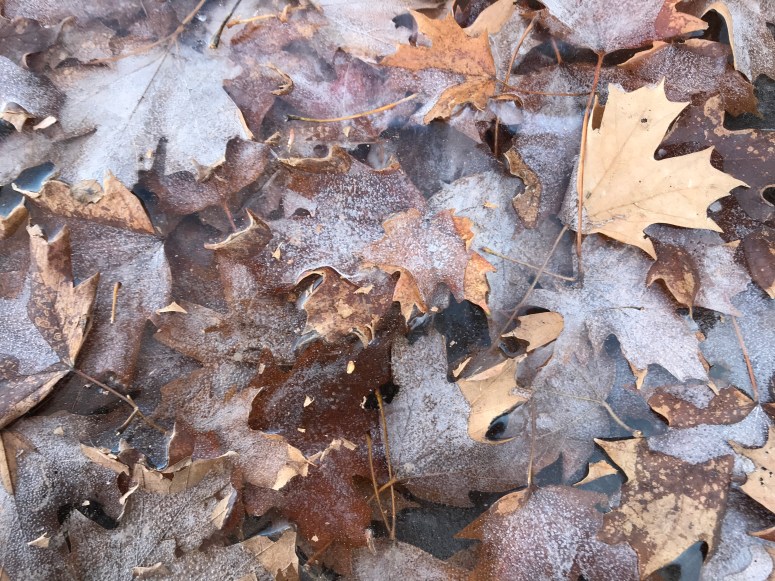
surely, i am a sucker for natural wonder, but these frozen leaves amaze me


Abstraction is a vehicle toward a beginner’s mind and expanded creativity.

Be abstract:

  • Emphasis on making something rather than defining what you are making.
  • Hold your chosen tool, face the thing you have selected to engage the tool with, and begin again.


Absence of Mind:

  • Quiet the volume on thinking through each step.
  • Allow the tools before you lead your expression.


Imagine it so:

  • If your tool can create it, so it exists.
  • Care not what it resembles, care for its originality.

I like to pause-it, pause-it, I like to…

IMG_0048

Paus-ability Practices:

  • Spend a minute each morning looking outside or in a direction easily neglected.
  • Dedicate the first hour of the day to art making.
  • Weekly, for an entire day, refrain from social media and get curious about the rest of life.

Pausing may be one of our most vital skills adults and artists apply before pressing charcoal or pen or paintbrush to paper (or chhcchmmm, Tweeting!). Like flossing cares for oral hygiene, we cleanse our creative spirit with a pause.